JavaScript is disabled in your browser. Please enable JavaScript to view this website.
AB279952

Phospho-NAK/TBK1 (S172) ELISA Kit

Phospho-NAK/TBK1 (S172) ELISA Kit

Be the first to review this product! Submit a review

|

(0 Publication)

Phospho-NAK/TBK1 (S172) ELISA Kit is a ELISA for the measurement of Phospho-NAK/TBK1 (S172) in Human in Cell/Tissue Extracts samples.

別名を表示する

NAK, TBK1, Serine/threonine-protein kinase TBK1, NF-kappa-B-activating kinase, T2K, TANK-binding kinase 1
2 Images
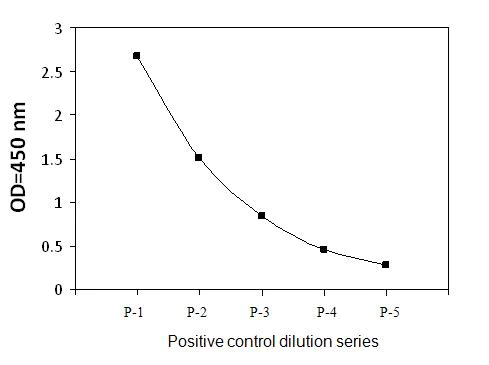
Sandwich ELISA - Phospho-NAK/TBK1 (S172) ELISA Kit (AB279952)
  • sELISA

Supplier Data

Sandwich ELISA - Phospho-NAK/TBK1 (S172) ELISA Kit (AB279952)

Positive Control.

HeLa cells were treated with Calyculin A.

Solubilize cells at 4 x 10⁷ cells/ml in Cell Lysate Buffer.

Serial dilutions of lysates were analyzed in this ELISA.
Sandwich ELISA - Phospho-NAK/TBK1 (S172) ELISA Kit (AB279952)
  • sELISA

Supplier Data

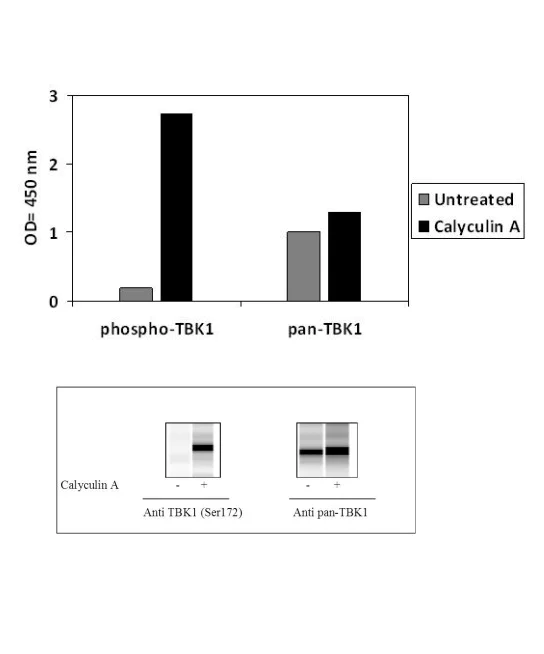
Sandwich ELISA - Phospho-NAK/TBK1 (S172) ELISA Kit (AB279952)

HeLa cells treated with/without Calyculin A.

HeLa cells were treated or untreated with Calyculin A.

Key facts

検出方法

Colorimetric

サンプルタイプ

Cell Lysate

交差種

Human

Semi-Quantitative
アッセイプラットフォーム

Pre-coated microplate (12 x 8 well strips)

Reactivity data

{ "title": "Reactivity Data", "filters": { "stats": ["", "Reactivity", "Dilution Info", "Notes"] }, "values": { "ELISA": { "reactivity":"TESTED_AND_REACTS", "dilution-info":"", "notes":"<p></p>" } } }

製品の詳細

Phospho-NAK/TBK1 (S172) ELISA Kit (ab279952) is a very rapid, convenient and sensitive assay kit that can monitor the activation or function of important biological pathways in human cell lysates. By determining phosphorylated NAK/TBK1 protein in your experimental model system, you can verify pathway activation in your cell lysates. You can simultaneously measure numerous different cell lysates without spending excess time and effort in performing a Western Blotting analysis.

This Sandwich ELISA kit is an in vitro enzyme-linked immunosorbent assay for the measurement of human phospho-NAK/TBK1 (S172). An anti-pan NAK/TBK1 antibody has been coated onto a 96-well plate. Samples are pipetted into the wells and NAK/TBK1 present in a sample is bound to the wells by the immobilized antibody. The wells are washed and rabbit anti-phospho-NAK/TBK1 (S172) antibody is used to detect phosphorylated NAK/TBK1. After washing away unbound antibody, HRP conjugated anti-rabbit IgG is pipetted into the wells. The wells are again washed, a TMB substrate solution is added to the wells and color develops in proportion to the amount of NAK/TBK1 (S172) bound. The Stop Solution changes the color from blue to yellow, and the intensity of the color is measured at 450 nm.

REACH authorisation
Abcam has not and does not intend to apply for the REACH Authorisation of customers' uses of products that contain European Authorisation list (Annex XIV) substances.
It is the responsibility of our customers to check the necessity of application of REACH Authorisation, and any other relevant authorisations, for their intended uses.

製品内容

{ "values": { "1x96Tests": { "sellingSize": "1 x 96 Tests", "publicAssetCode":"ab279952-1x96Tests", "assetComponentDetails": [ { "size":"1 x 12 mL", "name":"TMB One-Step Substrate Reagent", "number":"AB279952-CMP08", "productcode":"" }, { "size":"1 x 15 mL", "name":"5X Assay Diluent", "number":"AB279952-CMP04", "productcode":"" }, { "size":"1 x 1 Unit", "name":"Pan-NAK/TBK1 Coated Microplate", "number":"AB279952-CMP05", "productcode":"" }, { "size":"1 x 1 Vial", "name":"Positive Control - treated HeLa cell lysate", "number":"AB279952-CMP02", "productcode":"" }, { "size":"1 x 8 mL", "name":"Stop Solution", "number":"AB279952-CMP07", "productcode":"" }, { "size":"1 x 25 mL", "name":"20X Wash Buffer", "number":"AB279952-CMP03", "productcode":"" }, { "size":"1 x 5 mL", "name":"2X Cell lysate buffer", "number":"AB279952-CMP09", "productcode":"" }, { "size":"2 x 1 Vial", "name":"Rabbit anti-phospho-NAK/TBK1 (S172)-antibody", "number":"AB279952-CMP06", "productcode":"" }, { "size":"1 x 25 µL", "name":"HRP-conjugated anti-rabbit IgG concentrate (1000X)", "number":"AB279952-CMP01", "productcode":"" } ] } } }

出荷温度及び保存条件

出荷温度
Blue Ice
短期保存温度
-20°C
長期保存温度
-20°C
保管に関する情報
-20°C

補足情報

This supplementary information is collated from multiple sources and compiled automatically.

The NAK/TBK1 also known as TANK-binding kinase 1 is a fundamental protein kinase in various cellular processes. It weighs approximately 84 kDa and is expressed in many tissues including lymphoid organs and the brain. NAK acts as a serine/threonine-protein kinase which transfers a phosphate group to specific substrates modulating their function and activity. Phosphorylation by TBK1 initiates several signaling events making it an important regulator in immune responses and inflammatory signaling pathways.
Biological function summary

This kinase plays a significant role in antiviral defense and autophagy. NAK/TBK1 is also involved in innate immune signaling and cell survival. TBK1 forms part of a larger signaling complex interacting with adaptors like TRAF3 and TANK which are important for its proper localization and function. Phospho-NAK its phosphorylated form can activate other molecules driving various downstream immune and stress responses.

Pathways

The protein is integral to the type I interferon signaling pathway and NF-kB pathway. NAK/TBK1 interacts closely with IRF3 a transcription factor important for antiviral activity and plays a role alongside other proteins like IKKε. These interactions permit activation of genes necessary for defense mechanisms against viral pathogens and control of inflammation. In the NF-kB pathway TBK1 helps regulate cellular responses to stress and inflammatory signals.

NAK/TBK1 has associations with amyotrophic lateral sclerosis (ALS) and various cancers. Research shows connections between TBK1 mutations and ALS indicating its importance in neuronal function and health. Additionally aberrations in TBK1 activity contribute to oncogenesis as it can affect cell proliferation and survival. The protein's relation with signaling proteins such as p62/SQSTM1 highlights its diverse role in disease mechanisms making it a potential therapeutic target.

製品プロトコール

ターゲットの情報

Serine/threonine kinase that plays an essential role in regulating inflammatory responses to foreign agents (PubMed : 10581243, PubMed : 11839743, PubMed : 12692549, PubMed : 12702806, PubMed : 14703513, PubMed : 15367631, PubMed : 15485837, PubMed : 18583960, PubMed : 21138416, PubMed : 23453971, PubMed : 23453972, PubMed : 23746807, PubMed : 25636800, PubMed : 26611359, PubMed : 32404352, PubMed : 34363755, PubMed : 32298923). Following activation of toll-like receptors by viral or bacterial components, associates with TRAF3 and TANK and phosphorylates interferon regulatory factors (IRFs) IRF3 and IRF7 as well as DDX3X (PubMed : 12692549, PubMed : 12702806, PubMed : 14703513, PubMed : 15367631, PubMed : 18583960, PubMed : 25636800). This activity allows subsequent homodimerization and nuclear translocation of the IRFs leading to transcriptional activation of pro-inflammatory and antiviral genes including IFNA and IFNB (PubMed : 12702806, PubMed : 15367631, PubMed : 25636800, PubMed : 32972995). In order to establish such an antiviral state, TBK1 form several different complexes whose composition depends on the type of cell and cellular stimuli (PubMed : 23453971, PubMed : 23453972, PubMed : 23746807). Plays a key role in IRF3 activation : acts by first phosphorylating innate adapter proteins MAVS, STING1 and TICAM1 on their pLxIS motif, leading to recruitment of IRF3, thereby licensing IRF3 for phosphorylation by TBK1 (PubMed : 25636800, PubMed : 30842653, PubMed : 37926288). Phosphorylated IRF3 dissociates from the adapter proteins, dimerizes, and then enters the nucleus to induce expression of interferons (PubMed : 25636800). Thus, several scaffolding molecules including FADD, TRADD, MAVS, AZI2, TANK or TBKBP1/SINTBAD can be recruited to the TBK1-containing-complexes (PubMed : 21931631). Under particular conditions, functions as a NF-kappa-B effector by phosphorylating NF-kappa-B inhibitor alpha/NFKBIA, IKBKB or RELA to translocate NF-Kappa-B to the nucleus (PubMed : 10783893, PubMed : 15489227). Restricts bacterial proliferation by phosphorylating the autophagy receptor OPTN/Optineurin on 'Ser-177', thus enhancing LC3 binding affinity and antibacterial autophagy (PubMed : 21617041). Phosphorylates SMCR8 component of the C9orf72-SMCR8 complex, promoting autophagosome maturation (PubMed : 27103069). Phosphorylates ATG8 proteins MAP1LC3C and GABARAPL2, thereby preventing their delipidation and premature removal from nascent autophagosomes (PubMed : 31709703). Seems to play a role in energy balance regulation by sustaining a state of chronic, low-grade inflammation in obesity, which leads to a negative impact on insulin sensitivity (By similarity). Attenuates retroviral budding by phosphorylating the endosomal sorting complex required for transport-I (ESCRT-I) subunit VPS37C (PubMed : 21270402). Phosphorylates Borna disease virus (BDV) P protein (PubMed : 16155125). Plays an essential role in the TLR3- and IFN-dependent control of herpes virus HSV-1 and HSV-2 infections in the central nervous system (PubMed : 22851595). Acts both as a positive and negative regulator of the mTORC1 complex, depending on the context : activates mTORC1 in response to growth factors by catalyzing phosphorylation of MTOR, while it limits the mTORC1 complex by promoting phosphorylation of RPTOR (PubMed : 29150432, PubMed : 31530866). Acts as a positive regulator of the mTORC2 complex by mediating phosphorylation of MTOR, leading to increased phosphorylation and activation of AKT1 (By similarity). Phosphorylates and activates AKT1 (PubMed : 21464307). Involved in the regulation of TNF-induced RIPK1-mediated cell death, probably acting via CYLD phosphorylation that in turn controls RIPK1 ubiquitination status (PubMed : 34363755). Also participates in the differentiation of T follicular regulatory cells together with the receptor ICOS (PubMed : 27135603).
See full target information TBK1 pS172
websiteProtocolBooklet
en

Abcam product promise

当社は、高品質な試薬を通じてお客様の研究を力強くサポートすることをお約束いたします。ご使用いただく各段階で、常にお客様をサポートできる体制を整えております。万が一、製品が期待通りに機能しない場合は、「Abcam Product Promise」による当社保証制度に基づき、安心してご利用いただけます。
保証に関する詳細については利用規約をご確認ください。

Please note: All products are 'FOR RESEARCH USE ONLY. NOT FOR USE IN DIAGNOSTIC OR THERAPEUTIC PROCEDURES'.

For licensing inquiries, please contact partnerships@abcam.com