JavaScript is disabled in your browser. Please enable JavaScript to view this website.
AB277420

Human CD206 ELISA kit

Human CD206 ELISA kit

Be the first to review this product! Submit a review

|

(3 Publications)

Human CD206 ELISA kit is a Sandwich ELISA for the measurement of Human CD206 in Human in Biofluids, Cell Culture Media samples.

別名を表示する

CD206, CLEC13D, CLEC13DL, MRC1L1, MRC1, Macrophage mannose receptor 1, MMR, C-type lectin domain family 13 member D, C-type lectin domain family 13 member D-like, Human mannose receptor, Macrophage mannose receptor 1-like protein 1, hMR
1 Images
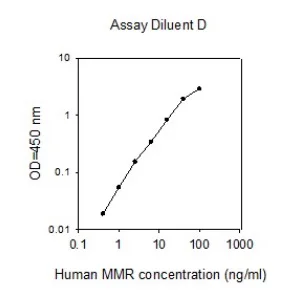
ELISA - Human CD206 ELISA kit (AB277420)
  • ELISA

Supplier Data

ELISA - Human CD206 ELISA kit (AB277420)

These standard curves are for demonstration only. A standard curve must be run with each assay.

Key facts

検出方法

Colorimetric

サンプルタイプ

Plasma, Cell culture supernatant, Serum

交差種

Human

アッセイタイプ

Sandwich

Quantitative
検出感度

= 0.41 ng/mL

検出範囲

0.41 - 100 ng/mL

アッセイプラットフォーム

Pre-coated microplate (12 x 8 well strips)

Reactivity data

{ "title": "Reactivity Data", "filters": { "stats": ["", "Reactivity", "Dilution Info", "Notes"] }, "values": { "sELISA": { "reactivity":"TESTED_AND_REACTS", "dilution-info":"", "notes":"<p></p>" } } }

製品の詳細

Human CD206 ELISA Kit (ab277420) is an in-vitro enzyme-linked immunosorbent assay for the quantitative measurement of Human CD206 in serum, plasma and cell culture supernatants.

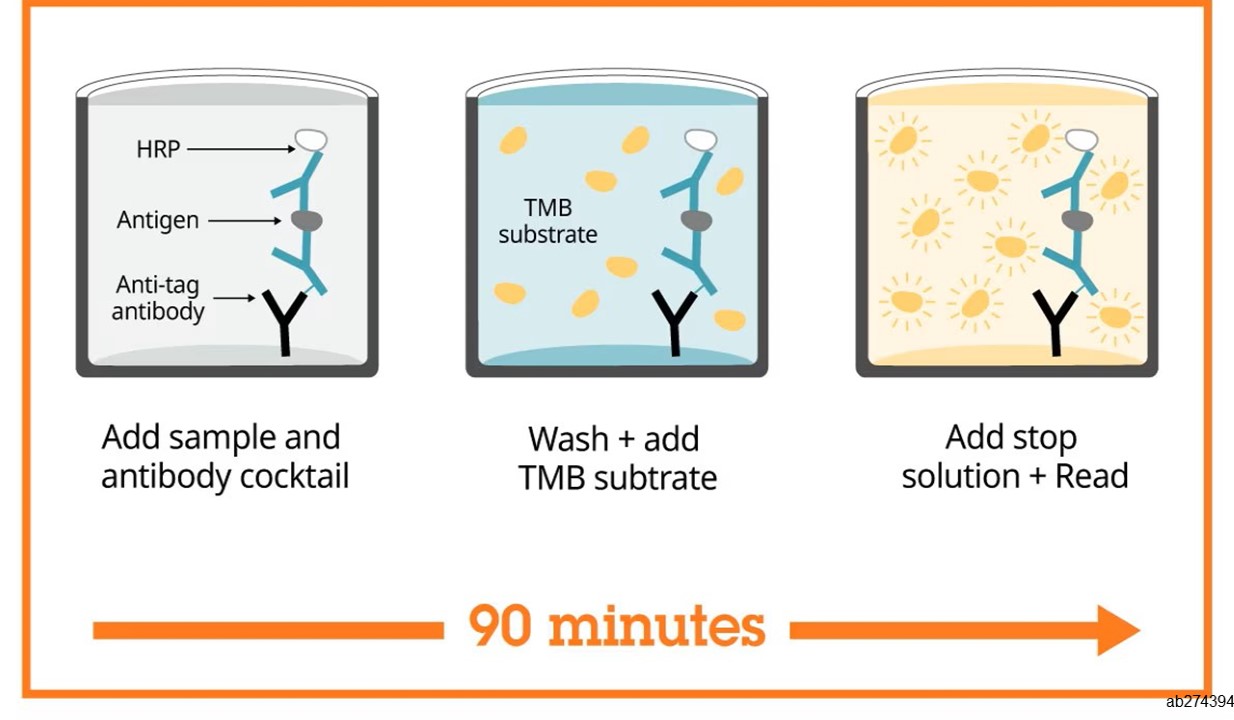
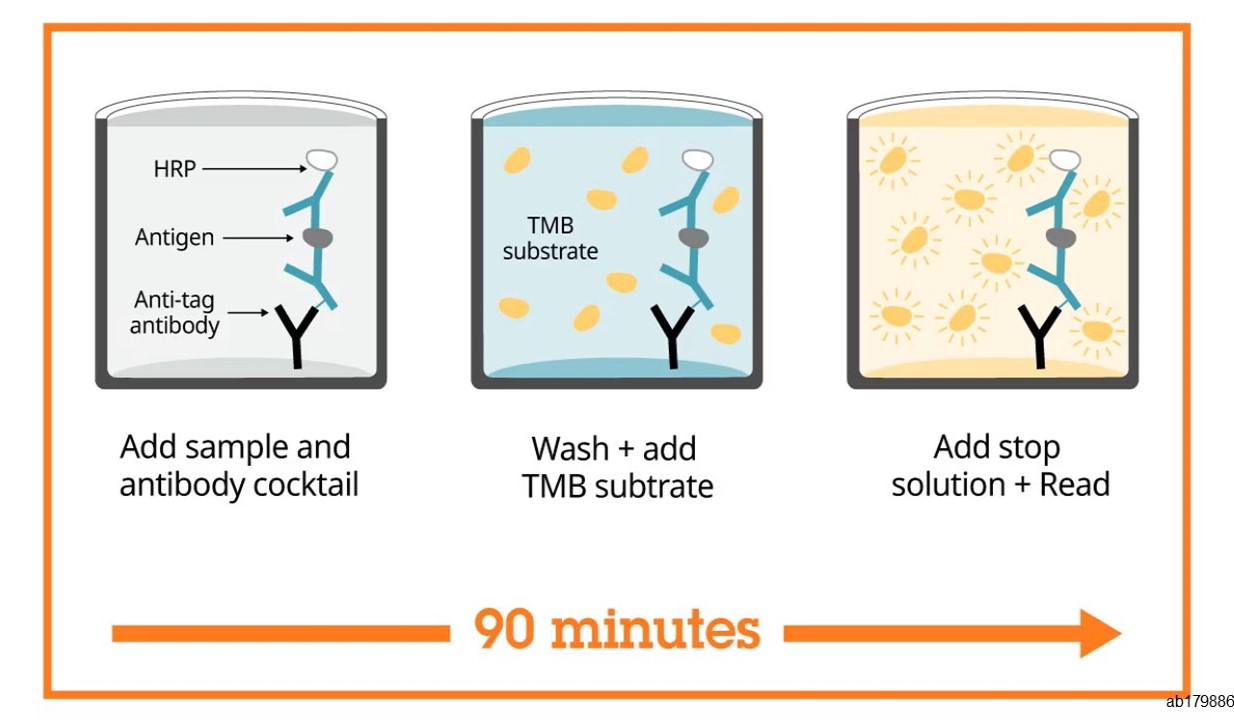
This assay employs an antibody specific for Human CD206 coated on a 96-well plate. Standards and samples are pipetted into the wells and Human CD206 present in a sample is bound to the wells by the immobilized antibody. The wells are washed, and biotinylated anti-Human CD206 antibody is added. After washing away unbound biotinylated antibody, HRP-conjugated streptavidin is pipetted to the wells. The wells are again washed, a TMB substrate solution is added to the wells and color develops in proportion to the amount of Human CD206 bound. The Stop Solution changes the color from blue to yellow, and the intensity of the color is measured at 450 nm.

精度

[ { "reproducibilityType": "Intra", "sample": "Overall", "replicates": 0, "mean": null, "standardDeviation": null, "coefficientOfVariability": "< 10" }, { "reproducibilityType": "Inter", "sample": "Overall", "replicates": 0, "mean": null, "standardDeviation": null, "coefficientOfVariability": "< 12" } ]

回収率

[ { "sample": "Serum", "range": "83 - 131 %", "average": "= 104.6" }, { "sample": "Plasma", "range": "93 - 142 %", "average": "= 110.3" }, { "sample": "Cell culture media", "range": "91 - 127 %", "average": "= 109.3" } ]

製品内容

{ "values": { "1x96Tests": { "sellingSize": "1 x 96 Tests", "publicAssetCode":"ab277420-1x96Tests", "assetComponentDetails": [ { "size":"1 x 15 mL", "name":"5X Assay Diluent D", "number":"AB277420-CMP05", "productcode":"" }, { "size":"1 x 15 mL", "name":"5X Assay Diluent B", "number":"AB277420-CMP04", "productcode":"" }, { "size":"1 x 12 mL", "name":"TMB One-Step Substrate Reagent", "number":"AB277420-CMP07", "productcode":"" }, { "size":"1 x 1 Unit", "name":"Anti-Human Mannose Receptor coated Microplate", "number":"AB277420-CMP02", "productcode":"" }, { "size":"1 x 25 mL", "name":"20X Wash Buffer", "number":"AB277420-CMP01", "productcode":"" }, { "size":"1 x 8 mL", "name":"Stop Solution", "number":"AB277420-CMP06", "productcode":"" }, { "size":"2 x 1 Vial", "name":"Human Mannose Receptor standard protein (Lyophilized)", "number":"AB277420-CMP08", "productcode":"" }, { "size":"2 x 1 Vial", "name":"Biotinylated Anti-Human Mannose Receptor Antibody", "number":"AB277420-CMP09", "productcode":"" }, { "size":"1 x 200 µL", "name":"500X HRP-Streptavidin Concentrate", "number":"AB277420-CMP03", "productcode":"" } ] } } }

出荷温度及び保存条件

出荷温度
Blue Ice
短期保存温度
-20°C
長期保存温度
-20°C
保管に関する情報
-20°C

補足情報

This supplementary information is collated from multiple sources and compiled automatically.

The Mannose Receptor also known as CD206 or MRC1 is a type of C-type lectin receptor with a molecular weight of 175 kDa. It is expressed on the surface of macrophages and dendritic cells. This receptor binds to complex carbohydrates like mannose and fucose found on pathogen surfaces playing an important role in their recognition. Mannose Receptors act as endocytic receptors aiding in the internalization and degradation of pathogens.
Biological function summary

The Mannose Receptor functions in pathogen recognition and clearance by binding to specific carbohydrates on the pathogen's surface. It is not part of a larger molecular complex but works independently to facilitate phagocytosis. The receptor is essential in immune responses allowing macrophages and dendritic cells to efficiently capture and process antigens for presentation to T cells. This enables the initiation of adaptive immune responses.

Pathways

Researchers know that the Mannose Receptor plays an important role in immune signaling pathways particularly in antigen processing and presentation. It interacts with proteins involved in these pathways including those necessary for the internalization and degradation of bound antigens. Moreover it works alongside scavenger receptors contributing to the regulation of immune and inflammatory responses.

The Mannose Receptor is often linked to pulmonary tuberculosis and certain types of cancer. When macrophages express this receptor it can modulate immune responses against Mycobacterium tuberculosis by aiding in its recognition. In cancer altered expression of CD206 can indicate tumor-associated macrophages which promote tumor growth by suppressing immune responses. These connections highlight the receptor's potential as a diagnostic marker and therapeutic target.

製品プロトコール

ターゲットの情報

Mediates the endocytosis of glycoproteins by macrophages. Binds both sulfated and non-sulfated polysaccharide chains.. (Microbial infection) Acts as a phagocytic receptor for bacteria, fungi and other pathogens.. (Microbial infection) Acts as a receptor for Dengue virus envelope protein E.. (Microbial infection) Interacts with Hepatitis B virus envelope protein.
See full target information MRC1

文献 (3)

Recent publications for all applications. Explore the full list and refine your search

Translational oncology 42:101867 PubMed38308919

2024

Transforming growth factor-β1 and soluble co-inhibitory immune checkpoints as putative drivers of immune suppression in patients with basal cell carcinoma.

Applications

Unspecified application

Species

Unspecified reactive species

Mahlatse C M Kgokolo,Nonkululeko Z Malinga,Helen C Steel,Pieter W A Meyer,Teresa Smit,Ronald Anderson,Bernardo L Rapoport

Nature communications 14:2057 PubMed37045813

2023

Targeting neuronal lysosomal dysfunction caused by β-glucocerebrosidase deficiency with an enzyme-based brain shuttle construct.

Applications

Unspecified application

Species

Unspecified reactive species

Alexandra Gehrlein,Vinod Udayar,Nadia Anastasi,Martino L Morella,Iris Ruf,Doris Brugger,Sophia von der Mark,Ralf Thoma,Arne Rufer,Dominik Heer,Nina Pfahler,Anton Jochner,Jens Niewoehner,Luise Wolf,Matthias Fueth,Martin Ebeling,Roberto Villaseñor,Yanping Zhu,Matthew C Deen,Xiaoyang Shan,Zahra Ehsaei,Verdon Taylor,Ellen Sidransky,David J Vocadlo,Per-Ola Freskgård,Ravi Jagasia

Experimental and therapeutic medicine 25:169 PubMed37006880

2023

IGFBP‑rP1 affects the proliferation, apoptosis and macrophage polarization of endometrial cancer cells by regulating the PI3K/AKT pathway.

Applications

Unspecified application

Species

Unspecified reactive species

Juan Gao,Shiqi Suo,Jingxia Li,Chunxia Wang,Ranran Deng,Yuxia Hu,Chunzheng Zhang
View all publications
websiteProtocolBooklet
en

Abcam product promise

当社は、高品質な試薬を通じてお客様の研究を力強くサポートすることをお約束いたします。ご使用いただく各段階で、常にお客様をサポートできる体制を整えております。万が一、製品が期待通りに機能しない場合は、「Abcam Product Promise」による当社保証制度に基づき、安心してご利用いただけます。
保証に関する詳細については利用規約をご確認ください。

Please note: All products are 'FOR RESEARCH USE ONLY. NOT FOR USE IN DIAGNOSTIC OR THERAPEUTIC PROCEDURES'.

For licensing inquiries, please contact partnerships@abcam.com